Florence Desmond


The name “Florence Desmond” may be familiar to those who have attended the Florence Desmond Day Unit at the Royal Surrey County Hospital in Guildford but not so many people will remember her for her acting talent during the first half of the twentieth century.

Born in London in 1905, Florence Desmond was performing on stage as a dancer from the age of 10.  She later became known as a singer and comic actress and as an excellent impersonator of famous actresses such as Bette Davis, Marlene Dietrich and Greta Garbo.  In her obituary in the Independent in January 1993 she was described as, "Not only the best impersonator of her generation, but by far the best."  She demonstrated a satirical talent without any cruelty to the people she mimicked.

In 1928 Florence performed in, "The Year of Grace," a revue written by Noel Coward and she accompanied the production to New York where she danced with him.  She was to take New York by storm 18 years later at the "Blue Angel" nightclub with her witty and accurate impressions of Hollywood stars using minimal props.  Miss Desmond participated in the Royal Variety performances in 1937 and 1951 and she was the leading lady in two films starring George Formby.  Mr. Formby called her, "an inimitable comedienne."  Florence also acted with Gracie Fields and frequently starred in pantomime as a principal boy.


In 1935 Florence married Tom Campbell Black, an aviator, but she was heartbroken a year later when her husband died at Speke Airport in Liverpool after his plane struck an RAF plane on the ground.  Her second husband, Charles Hughesdon, was also an aviator and in 1937 they set up home together at Dunsborough Park in Ripley.  During the Second World War, Florence toured army camps with ENSA entertaining the troops.  Her peaceful post war life was upset by a daring robbery. Luckily Florence and her husband were away from home and the household staff disturbed the burglars, but not before they had stolen a mink coat and stole. 

In 1963, Florence Desmond began fundraising for the purchase of a Betatron electron therapy unit to be installed at St Luke’s Hospital in Guildford.  She stated that, “If Betatron had been available, cancer might not have killed my beloved father.”  The Betatron, made in Switzerland, the first of its type in the UK, was used to treat primary malignant cancer.  £200,000 was required, of which Miss Desmond personally contributed £9,000 .  The climax of the fundraising was a Royal Gala on the stage of the Odeon in Guildford attended by Princess Alexandra and her husband Sir Angus Ogilvie, with performances by Vera Lynn and Max Bygraves.

The Betatron was installed in 1967 and remained in service at St Luke’s Hospital for 24 years.  A ward at St Luke's was named Desmond Ward in recognition of her considerable achievement. In 1991 when the McMillan Day Hospital was transferred to the Royal Surrey County Hospital it was decided to use her name again for the new Florence Desmond Day Hospital and on October 16th that year Florence visited so that she could see the excellent new facilities.

Florence Desmond spent her retirement at Dunsborough Park, enjoying the attractive gardens and the farm where she was once pictured in the Evening Telegraph with her sow and 10 piglets.  She died in Guildford on January 16th 1993 at the age of 87.

Florence Desmond performing with George Formby.

The little book belonging to Bartholomew Glasscock


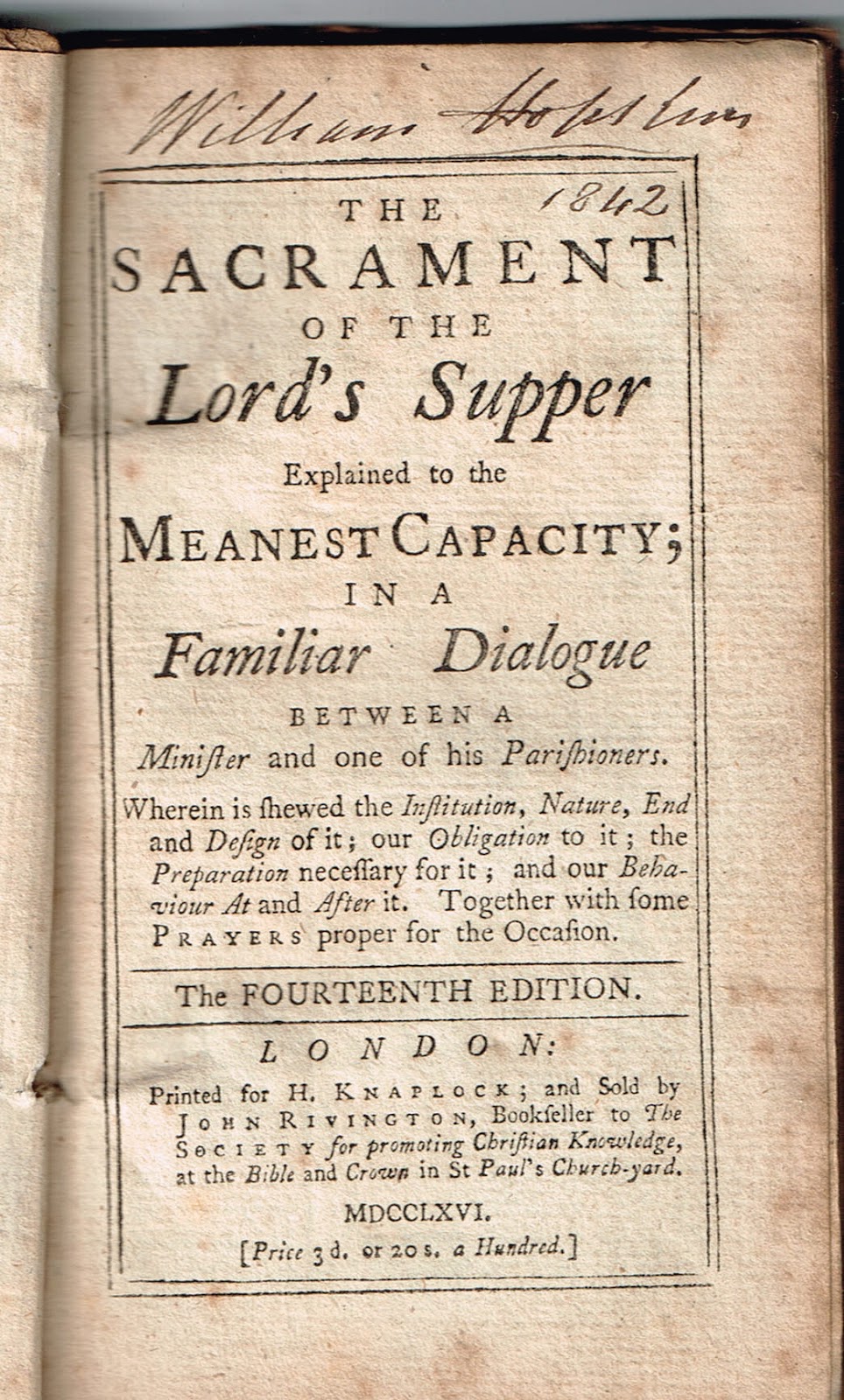
One of the most exciting finds connected to my family history was a tiny book wrapped in brown paper.  It was hidden in a bookcase which I was going through after my mother died.


When first researching my grandmother’s ancestry I had hit a brick wall with her grandmother Elizabeth Palmer.  In 1842 Elizabeth Palmer married William Hopkins, part of a well-established family of Thames Lightermen in Lambeth and Southwark, but Elizabeth came from the small village of Sheering in Essex and I had problems discovering more about her family.

Gradually over many years I traced her father Thomas Palmer son of George Palmer and Mary Glascock also from Sheering and I was intrigued by Mary’s father Bartholomew Glasscock who although also born and married in Sheering appeared as a witness to many marriages at St Mary’s church in the nearby village of Matching.


Opening the little brown book revealed that all my research had been correct.  There were four handwritten names, three of which followed the family tree I had researched. The second name was Bartholomew Glasscock my 5th great grandfather, the third name was Elizabeth Palmer, my 3rd great grandmother and the last name Constance Talbot was my grandmother.

So what is this little book?  It is “The Sacrament of the Lord’s Supper explained to the Meanest Capacity in a Familiar Dialogue between a Minister and one of his Parishioners” printed in 1766.  On the next page was written William Hopkins, husband of Elizabeth Palmer and the Granddad who had passed the book on to Constance Talbot.


I was able to discover William Dearing by Googling.  He was Vicar of St Mary the Virgin in the village of Matching in Essex from 1761 until 1785.  This was the time when Bartholomew Glasscock was witnessing marriage ceremonies in that church.


St Mary the Virgin, Matching, Essex

I have now visited the charming church in Matching down a narrow country lane and continue to explore the Glasscock family in Essex. I do like it when all the pieces of a jigsaw fit together especially with a primary source!

In December 2015 I was contacted by a Glascocke descendent in Virginia.  We are now investigating the unlikely possibility that our shared ancestor was one of the first 17th century residents of Jamestown, Virginia.

A Policeman's Lot

One spring day in 1976 my parents took me to the Cathedral of St Mary the Crowned in Main Street, Gibraltar.  There we were ushered into the vestry where a large old book lay open.  On its pages we read of the baptism of Jorge Weir, son of Juan Weir and his wife Rosa Smith in 1841.  This was the baptism of my great grandfather George Ware, the son of an army corporal, whose Irish wife insisted that their son was baptised in a Catholic church rather than by the Anglican chaplain in the garrison.  George already had an older sister and two years later another sister was baptised at the Cathedral.  Perhaps because of the crowded conditions in which army families lived in Gibraltar, this little girl did not live long. 

 In 1844 the 7th Royal Fusiliers, with whom John Ware was serving, embarked for Barbados.  There, Rose Ware gave birth to another daughter, Margaret and both she and George thrived in the warm climate.  Their mother, however, was seriously ill with Scarlet Fever during the voyage home, but thankfully she recovered and in 1848 the family set sail for Halifax, Nova Scotia, where a year later James Ware was born.  After just over two years the Wares returned to England, first to Winchester where another son, William, was born in 1850 and after a short time in Portsmouth to Devonport where the last sibling Louisa appeared in 1853.

John Ware had been born in York but on his discharge in 1854 he chose to live in Hull where he had found employment with the Coastguard.  Sadly Rose died within a year and 14 year old George found himself work on a whaling ship.  At the age of 16, George married 17 year old Elizabeth and they had a young son John George.  Seeking a better life for his family George set out for London to join the Metropolitan Police force.  Working in Limehouse, he was known for his toughness.

 George only stayed in London for 2 years but this valuable experience was put to good use when he moved to the police force in Leeds.  There, according to the writer of his obituary, “His intelligence and smartness were quickly recognised, and he was entrusted with much detective work, in which he particularly distinguished himself.”  He quickly gained his sergeant’s stripes, and it was not long before he was promoted to be an inspector, and further to be Deputy Chief Constable- and all this within the space of 5 years.

At this point George Ware heard of an opening in Kings Lynn, Norfolk.  Lieut. Cornelius Reeve was retiring as Superintendent of Police.  George applied for the position and despite being only 25 he was selected from a large number of candidates.  As a young man of the lower classes and an experienced policeman he was an unusual choice.  It was normal to choose a retired army officer of greater age, but the Lynn Watch committee had asked Lieut. Reeves to resign for being drunk on duty and they were impressed with George Ware’s record in Leeds.  His family was given rent free accommodation adjoining the Guildhall, next door to the Police Station in the Saturday Market and Mrs Ware was appointed Hall Keeper at £15 per year.


But all was not plain sailing for Superintendent Ware.  Six months after taking command George prepared his men for an inspection by Major-General Cartwright.  On 24th June 1867 the Watch Committee looked on proudly as Supt. Ware drilled his men.  The Major-General congratulated him on the efficiency of the establishment and was impressed by the arrangements for interim custody of prisoners.  He was, however, less satisfied with their relief to vagrants and directed that, “strict attention should be given to the searching of all suspected applicants, so as to distinguish as far as practicable the destitute wayfarer from the professional beggar and vagabond.”  Supt. Ware was personal charged with relief of casual paupers which he found most distasteful.

Two weeks later, the Mayor of Kings Lynn instructed Supt. Ware that his men should use every means at their disposal to prevent public begging in the streets.  But George resisted; he knew the hardships which people would suffer to keep their families out of the Workhouse and he feared the bad reputation his officers would receive if they constantly chased ragged urchins around the streets.  An angry interchange, between the brash young police Superintendent and the middle aged solicitor who was Mayor, meant that the Watch Committee had to deal with the fall out.  At a meeting of the committee next day the Mayor complained about Supt. Ware’s improper and insulting behaviour and George was told to move out with his family by Michaelmas.  Thankfully at the Town Council meeting 5 days later, the call for George’s resignation was considered to be out of all proportion to the offence.  The Mayor agreed to ask the Watch Committee to rescind their decision since Supt Ware had offered him a full and satisfactory apology.

On the personal front, George also suffered during his early years in Kings Lynn.  Within a month of their arrival, his daughter Elizabeth died and daughter Lillie born the following year died at 12 months.  Soon his wife, Elizabeth was also dead, leaving him to bring up his two sons John and Leon.  Things improved when he met and married Rebecca Linferd in 1870.  She was a farmer’s daughter from the nearby village of Walpole St Peter and as the years went by, she and George had six children.

Although George’s job was unchanged, the Watch Committee thought it appropriate to change his job title in 1889 when he became Chief Constable of the Borough Force.  Throughout his tenure George Ware was a, “hands on,” policeman who solved many crimes of national proportions.  Living close to Sandringham, he frequently had to arrange Royal protection and accompany parades.  Coming from a musical family he had established a police band which became very popular.


In 1898, suffering from chronic gout and attacks of bronchitis George Ware tendered his resignation after 40 years in the police force.  He was presented with a gold watch, a testimonial signed by 142 subscribers and a cheque for £133.  He retired to Bournemouth where he died in 1911 nursed by his third wife, Jane.

Sources
"A Movable Rambling Police" An official History of Policing in Norfolk by Brian David Butcher
"Glimpses of Fiddaman's Lynn" by Rosemary & Stan Rodliffe
Lynn Advertiser 28 April 1911

You can read about one of Superintendent Ware's investigations here

Dying of flu – Another tragic consequence of World War One

The flu pandemic of 1918, which killed more people than the First World War, was wrongly named Spanish Flu.  Research by a team from St Bartholomew's Hospital and the Royal London Hospital suggested the troops and hospital camp at Etaples were the centre of the virus.  Records revealed last year suggest that influenza may have arrived with the 96 000 Chinese labourers who were brought in to work behind the lines on the Western Front.  But it was the movement of troops travelling home at the end of World War One which ensured its spread around the world.

Many of the victims were women, particularly those who were nurses. These were three of them.


In the War Plot of Old Stoke cemetery in Guildford can be found the grave of 29 year old Staff nurse Elizabeth Annie Challinor, who after training at Manchester Royal Infirmary, had joined Queen Alexandra’s Imperial Military Nursing Service.  She was sent to work at the Cambridge Military Hospital in Aldershot where in 1918 she contracted influenza which lead to pneumonia and death.  Her father, a widower, had moved down to Guildford from their home in Lancashire and so he arranged for to be buried in the town rather than at Aldershot.  The will she had written when joining the service left everything to her sister Edith.  This amounted to three pounds nine shillings and sixpence after her board and washing had been deducted.  No funds were provided for her funeral as she was considered to be a civilian dying at home.


In the same month, also at the Cambridge Hospital, Aldershot, two young VAD nurses died.  Dorothy Jeanette Squire had been born in Bedfordshire in 1888, the daughter of a farmer.  By 1911 she was living in Ramsgate, Kent with her widowed mother.  Her fellow VAD Muriel Edith Elizabeth Forde Tichbo(u)rne came from Ireland where she was born in 1893.  Muriel's father was a Canon in the Church of Ireland and after she died, he arranged for a memorial stained glass window to be erected in the church of St Marks in Armagh.  Both Muriel and Dorothy were buried in the military cemetery in Aldershot.

Sources
www.redcross.org.uk
Commonwealth War Graves
www.Ancestry.co.uk

Matron of a War Hospital. Agnes Withers 1875-1952


When Guildford War Hospital was established in the Workhouse at Warren Road, Guildford in 1916, its first Matron was Agnes Harriett Withers.  Miss Withers who was 40 at this time, had been born in Somerset, the daughter of a dairyman, and trained as a nurse at the General Infirmary and Gloucester Eye Institute.  On completing her training she continued to work in Gloucester as a Staff Nurse before moving to Brighton Hospital for Women as a Sister Midwife from 1901 until 1904.  After a year in charge of a private medical and surgical Home in Ipswich, Agnes was interviewed to join Queen Alexandra’s Imperial Military Nursing Service.  She was recommended for a position at Louise Margaret Hospital in Aldershot and a year later she moved to the Military Family Hospital in Curragh.  In 1911 her breadth of experience was rewarded by appointment as matron at Shorncliffe Military Families Hospital in Folkestone.


Towards the end of 1913, the QAIMNS Reserve was prepared, ready for the event of war.  Agnes Withers was one of only 300 trained nurses in the Reserve, although by 1919 it was made up of 10,404 fully trained staff.  In September 1914, Miss Withers was told to prepare herself for travel to Malta but this was cancelled and she remained at Shorncliffe Hospital until her appointment as matron in Guildford on June 10th 1916.  Agnes worked at Guildford war Hospital for 13 months before being posted to Salonika via France on July 26th 1917.  Her duties establishing the Military Hospital at Guildford were recognised by the Royal Red Cross Second Class awarded to her by the King in April 1917 and she retained a link with Guildford, having her post sent to the Williamson sisters who lived in Epsom Road, Guildford.


Agnes continued as Matron in Salonika until the end of the war, receiving the Greek medal for Military Merit before being posted to Malta as Sister-in-Charge.  When she left Salonika in 1919 she was given a glowing report by Lieut-Col. Gates, the Officer in Charge.  He said that Miss Withers was, “of even and cheerful disposition and displayed great energy and zeal for the welfare and nursing of the sick and wounded.  Her tact and high standard of conduct have made her respected and liked by the whole staff of the hospital.”  He added that she was, “A good organiser and manager who obtains the best work from her staff with the minimum of friction.  Her determination and personality make her thoroughly capable of managing a large staff.”

In 1922 Agnes was finally allowed to return to England for a long leave which she spent with the Williamson sisters in Guildford before starting work at Chatham Military Families Hospital.  She was probably relieved to return to Louise Margaret Hospital in Aldershot in 1924, where she worked until her retirement in 1926.  She obviously continued to enjoy travelling as during her retirement Miss Withers can be found on the passenger list of ships to Gibraltar and Port Said and she also visited Switzerland.  Her residence from 1922 until at least 1945 was in Guildford and when she died in 1952 her funeral service was at Woking Crematorium.

The wives of Transported Convicts


When a man was convicted of a major crime in the 19th century he was often transported to Australia, leaving his family without means of support.  When this happened, his wife and children usually ended up in the local workhouse and there are records of a few couples, whose fate this was, in Guildford, Surrey.  


In 1844 George Woods aged 35, was transported to Van Diemen’s Land for 7 years after entering enclosed land unlawfully, carrying a gun.  George and his wife had three daughters and a son.  At the Surrey Sessions in Newington, evidence was given that he had threatened James Puttock with a gun while on his way to poach game.


Another local labourer, Thomas Jackman, was transported for 10 years in 1846 for sheep stealing.  At the time. Thomas was 25 and he and his wife Elizabeth had a baby son, Jeremiah.


In fact, although their sentences would hopefully expire while they were still alive, they were not provided with a return passage to England, so it was effectively a life sentence.  Their wives Ann Woods and Elizabeth Jackman entered Guildford Union Workhouse.

 By 1861, Elizabeth Jackman, describing herself as a widow, was living with her son and her father in nearby Worplesdon, working as a dressmaker.  Soon she married Thomas Baker, a grocer and baker and they rapidly had three children.  Elizabeth's son Jeremiah Jackman died in 1861 and she was widowed again by 1891.  Obviously a strong healthy woman, Elizabeth Baker can be found on the 1911 census, aged 89, living in Streatham, south London with her grand-daughter Daisy Baker.

Another Surrey resident who had shared this fate was Nathaniel Longhurst, who was born in Ewhurst, in 1785.  Nathaniel was a farm labourer who, by the time he met 16 year old Rebecca Wood from Shere, was already a widower.  Despite a 25 year age gap, they were married in St Nicholas’ Church, Guildford on 22nd November 1829.  Within a year, Nathaniel had been arrested for offences against the Game Laws and was imprisoned for 6 months.  In 1831 Rebecca and Nathaniel had a daughter Sophia.  A son, William, was born in 1833 and another son, Robert, in 1834 but sadly at that point, Nathaniel Longhurst was arrested for poaching, a very serious crime.  He was convicted and sentenced to transportation for 14 years.  Rebecca had no choice but to enter Guildford Union Workhouse.

Prison Hulk 
After being kept on a prison hulk in the river Thames for a few months, Nathaniel was transported to Australia on the "Bardaster" along with 240 other convicts, arriving in Tasmania on September 7th 1835.


By 1841 Rebecca had left the Workhouse and was living with her father James Wood, in Shere. In another part of the village Rebecca’s children Sophia, William and Robert were living with her mother Martha.  In 1851 Rebecca was sharing a house with both her parents, accompanied by her daughter Sophia and her sister Esther Wood and nephew Benjamin.  Her father, James Wood, was a grocer so he was probably able to feed this extended family.  Rebecca would have heard nothing from Nathaniel since he departed for Australia in 1835 and she would not have known whether he was alive or dead.

It is probably not surprising therefore, that on 27th April 1856 in Mickleham, she married Thomas Gadd, a widower.  Rebecca Longhurst described herself as a widow, although we now know that was not the case.  Of necessity, Nathaniel had remained in Australia after serving his sentence and he never remarried.  Rebecca's husband, Thomas Gadd was a rake maker in Newdigate and by 1871 Benjamin Wood, Rebecca’s nephew was working for him.  Thomas Gadd was seven years older than Rebecca and by 1875 he had died.  Unknown to Rebecca Gadd (Longhurst), Nathaniel had died in Australia in 1867, aged 82 so she now really was a widow twice over.

At the age of 62, on February 5th 1876 in Newdigate, Rebecca Gadd married for the third time, on this occasion to 64 year old widowed farmer, James Sanders.  Three years later, Rebecca died, while her third husband James Sanders outlived her by another 10 years.

A new Life in Canada

One Saturday in May 1885 nine children were taken from various parts of Guildford Union Workhouse into the handsome oak-lined boardroom.  There they stood nervously before the twenty seven grand gentlemen and one lady of the Board of Guardians.  The Board included Miss Augusta Spottiswoode, one of the first women to be voted on to a Board of Guardians.  Miss Spottiswoode was anxious to break the spiral of poor or orphaned children following their parents’ path into pauperism and crime by giving them an industrial education and removing them from the workhouse by boarding out.  Now she espoused the cause of sending orphans to start a new life in Canada.

Guildford Union Workhouse
One of the children standing in front of her was Walter Shires, an 11 year old boy from a tragic family.  He can be found age 7, amongst the inmates listed in Guildford Union Workhouse in 1881 and next to him, the name Mary Ann Joyce, age 12, who was his step-sister.  Both children had been orphaned two or three years earlier, but only Walter would be part of the small party of children sent out to Canada to begin a new life.

Walter’s mother Kate May married William Joyce at St Nicholas, Guildford in 1866.  He was an Agricultural Labourer and by 1871 they were living in the area of St Catherine’s with their three children, William John Joyce, age 4, Mary Ann Joyce, age 2 and newly born Kate Elizabeth.  Sadly, Kate died within a few months and a year later their father, William Joyce, was buried in St Mary’s churchyard, aged 26.

The young widow, Kate Joyce, married again next year, this time to labourer Walter Henry Shires.  Their son, also called Walter Henry Shires was born shortly afterwards but there is no evidence of any other children born to the couple before Kate’s death in 1878.  At the age of 30, her funeral was held at St Nicholas’s.  With three young children to look after, Walter Shires senior entered Guildford Union Workhouse where he died a year after his wife, aged 37.

By 1881, the eldest boy William John Joyce was 14, so he was working as a farm servant in Hambledon.  The next time we find Mary Ann Joyce is in 1891 when she is living in Spitalfields with three other girls, all with no occupation, in the household of a Docker and a Laundress.

Meanwhile, young Walter Henry Shires was part of an experiment which hoped to give young people an opportunity of a better life in Canada than was possible, given their unfortunate start, in England.  By 1884 many stories were told by well-meaning ladies such as Miss Maria Rye, Miss Ellen Belborough and Mrs Burt about the success of taking destitute children via Liverpool to Canada where they were needed for employment as servants.

John T Middlemore and some of the young immigrants
Miss Spottiswoode was particularly eager to give some of the children from the Union Workhouse this opportunity.  She believed, ”that if all unions adopted the means at their disposal for promoting the emigration of children, it would do much to stamp out pauperism in the country.”  She had been told by John T Middlemore of his receiving home in Ontario where he had begun to send children from his Children’s Emigration Homes in Birmingham.  He undertook to arrange transport of children from poor Law Unions in Guildford, Bermondsey and Wolverhampton via Liverpool.

Despite opposition from other members of the Board, based on the young age of the emigrants, the advantage of separating the children from mixing with the children of casual paupers, outweighed the arguments.  The nine orphans, aged 3 to 9 years were summoned into the Boardroom where they were asked whether they were willing to go to Canada.  The six eldest children, including Walter Shires, Alfred Curtis and John and Annie Walker, agreed, but it was decided by the Board that the youngest three should remain in Guildford.

Guthrie Home
Just over a week later the children set sail on “The Lake Winnipeg” en route for the Guthrie Home in London, Ontario.  From there, 12 year old Walter was sent to live with J D Crane, a farmer in Chatsworth, Ontario.  Each child was subject to one inspection to check that his new home was suitable.  Walter Shires was reported to be both honest and untruthful, stubborn, sulky and a source of trouble.  He was, however, “showing signs of slight improvement,” in his behaviour, although suffering from scalp disease.


In later years Walter married and had 2 children, before his death in 1937.  He was one of over 5000 children taken to Canada by the Middlemore Homes but there were many more children who were expatriated by Barnardos, the Children’s Friend society and other organisations adding up to approximately 100 000 emigrants.

It seems fitting to conclude with a quotation from the journalist of Guildford Jottings in the Surrey Mirror in 1885,

“Although one feels almost guilty of expatriating the poor little ones by deciding to send them from our shores, it does not follow that it is not in reality, the very kindest thing it is possible to do for them.  They are at a premium in Canada, they are a discount here.  It’s just as well to get a premium on one’s wares where possible.”

Sources
Surrey Mirror May 1885 via www.findmypast.co.uk
http://www.thisisourtownguildford.co.uk/guildford-workhouse-the-spike-st-lukes-hospital/
www.Ancestry.co.uk

You can read more about children sent from Guildford to Canada here