Misericords of St Laurence's church, Ludlow #symbols

Misericords provided support for the clergy and choir as they stood during long church services.  In St Laurence's church in Ludlow, which I visited this week, there are 28 of them, the largest collection in any parish church.  These were carved in the early 15th century and are decorated with symbolic images. Here are 10 of them.


This represents a harpy with bats' wings like her evil companions. Harpies were believed to charm men in order to destroy them. There is a definite anti-feminist viewpoint linked to Eve in the Garden of Eden.


Supported by dolphins, the mermaid was a seductress who lured men to their death.


The Bishop bathed in sunlight, supported by two mitres, represent the goodness of the church.


We might recognise these as the Prince of Wales feathers but when this was carved, they were remembered as the badge of Edward of Woodstock, the Black Prince, father of Richard II.


And here is the Hart at Rest, badge of Richard II, deposed by Henry IV, the first Lancastrian King.


A falcon supported by heraldic fetterlocks were the personal badge of Richard Duke of York (1411-1460) lord of Ludlow.


Contrary to modern thought, owls were used in medieval symbolism to represent ignorance and darkness.


A swan with two leaves was the badge of Mary de Bohun who married Henry Bolingbroke, later Henry IV, the first Lancastrian king.


A griffin was said to guard hidden treasure so became a symbol of watchfulness and was adopted as a badge by Edward III.


Departing from royalty I will end with the drunken tapster, taking illicit wine from his master's cask, thereby breaking his trust.

Family weddings in the 20th century #fashion


In every family photo collection you will find wedding photographs.  I have been looking through my family's photos and am intrigued by the different fashions.  The picture above is my parents' wedding in Scotland in 1948.  It was June but it was wet and windy. I vividly remember my grandma's fox fur falling out of the top shelf in the wardrobe and being scared of the beady glass eyes.

When Grandma married in 1912, she and her mother sailed across the Atlantic to Montreal where my Grandpa was working as an architect.  There are no photographs of them together but this one shows her in a nearby park, after a very small wedding.


Five years later my husband's grandfather used his army leave to marry in September 1917.  I am still trying to identify the regiment of Wilf's army uniform.


My father had the pleasure of being chosen as a pageboy at his older cousin's wedding at St George's Hanover Square in 1927.


Sitting on the floor with a pudding basin haircut he doesn't look very happy.

There is a gap in years in our family until my wedding.


So here I am on a November evening in 1975 with my matron of honour, Jane. My mother crocheted my dress with a pattern from a womans' magazine and Jane bought the blue material to make her dress in Libertys in Regent Street. We both wore silver shoes with high heels.

I will conclude with a group picture from my parents wedding in 1948


Cléo de Mèrode, spirit of La Belle Epoque


In Paris, La Belle Epoque, the Beautiful Era began in 1871, when the Franco-Prussian War ended, and lasted until the First World War began in 1914.  The French Third republic enjoyed a time of peace and prosperity and the joi de vivre inspired a golden age of music and literature.  In 1889 the World Trade Fair was held in Paris and the new Eiffel Tower shown to all the visitors.  Many flocked to see Burlesque at the Folies Bergère and Art Nouveau was indeed a new and popular design style.

L'Opera, Paris


In this environment, the dancer Cléo de Mèrode flourished. Descending from Austrian aristocracy, she was enrolled for dancing lessons when she was 7, at the Paris Opera Ballet, making her debut at the age of 11. Her beauty and graceful dancing prompted Degas to include her in his ballet paintings, Alexandre Falguière to sculpt The Dancer, using Cléo as his model and Toulouse Lautrec to paint her portrait.  Many photographs were taken, showing her slim waist and distinctive hairstyle and postcards of her image were avidly collected.


In her private life she enjoyed cycling and playing the piano.  In 1896 King Leopold II of Belgium visited Paris, saying he had come to see Cléo dance.  He sent her dozens of presents and as the 61 year old King had previously had many affairs it was presumed that he was now involved with the 22 year old dancer.  Cléo was horrified at the effect on her reputation and denied any involvement but later choosing to dance at the Follies Bergère did nothing to enhance the public’s opinion of her morals.  Despite this she became an international star.  She earned a great deal of money, briefly acting and dancing in America and when she toured Scandinavia in 1904, she received 3000 love letters from fans.


Cléo de Mèrode continued dancing into her 50s when she retired to the chic seaside resort of Biarritz.  There she gave ballet lessons until she was over 80.  She never married and confessed to only two relationships. When she died in 1966 she was buried in Père Lachaise cemetery in Paris.


The tomb of Cléo de Mèrode

Mrs Beeton's Book of Household Management #wwwblogs

In mid Victorian times Mrs Isabella Beeton published an illustrated book to help middle class women manage their household and entertain successfully.  First published in 1861 it was a reprint of the 24 monthly installments printed in her husband's magazine.  It continued to be reprinted after her early death at the age of 28, being edited and updated as appropriate.

In 1923 my grandmother bought the latest edition, but I am not sure how much influence it had on her lifestyle.

This sunny bedroom certainly was an up to date picture, but unfortunately my grandmother had inherited Victorian furniture. Watch out for those "noxious gases" from the waste pipe!


Perhaps my father's nursery looked like this, but I doubt it.


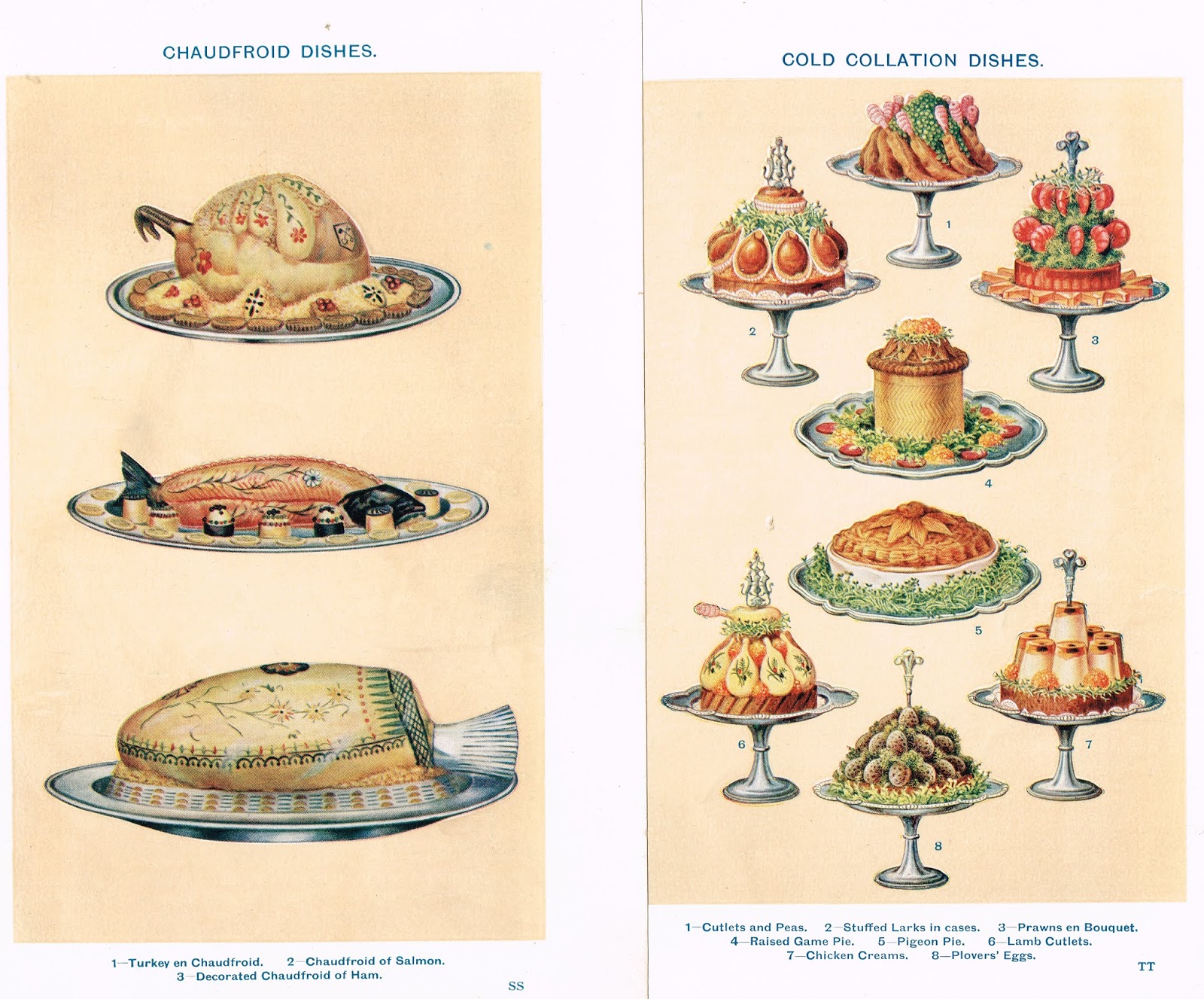
These impressive displays look as though they came from the original edition and I seriously doubt that my grandmother and her daily maid could achieve such a banquet.

To read about Isabella Beeton go to https://paulineconolly.com/2016/truth-isabella-beeton/

My Dad's war #postcards #WW2

When I was a child in the 1950s, my father used to tell me stories about his time in the Royal Engineers during the second world war. Initially he was sent for training in the north of England where he was allocated a bunk in a cold hut with a pillow full of straw and 3 army blankets and given 2 battle-dress uniforms, 2 pairs of boots, an overcoat, a rifle and a bayonet.  He also received a knife, a fork and a spoon to use and to keep clean.  They rose at 6 am and spent the day doing drill, PT, marching and learning to use the rifle and a bren gun, till lights out at 10 pm.


A humble sapper, a few months later, he set sail with his comrades shortly after his 21st birthday for Operation Husky the invasion of Sicily as part of Field Marshall Montgomery's 8th Army.  It was the first joint operation by the British, American and Canadian soldiers and the men were pleased to discover that the people of Sicily welcomed them.


Jim's soldier's service paybook gives me the dates and locations, and the collection of postcards he brought back, though pre-war photos, tell me something of what he saw.


A month later he was en route for North Africa.  The main African campaign had been successful but Rommel was still attempting to break through the British Army. 


Within three weeks, the men returned to mainland Italy, landing as part of  Operation Avalanche.  This time invasion was much harder. The engineers' tasks were to clear minefields and rebuild the bridges which had been destroyed by the Allies and by the Axis forces.  Moving north from Reggio, the British troops reached Salerno in late October 1943


before moving inland to Sessa Aurunca.


They also went to Ravello 


Agropoli and Capua


Jim remained in Italy until March 1944 when he returned to England for training prior to D-day.